A complete AI DevSecOps system.On AWS you own. Set up in a day.
Infralista is the AWS platform where AI agents don't just write code — they operate the app. Every night they pick up bugs from your board, reproduce them from real production logs, ship fixes as reviewable merge requests, and stop themselves when a change is above their pay grade — inside IAM guardrails and a spend-breaker, in your own account. Not a demo: one human and a fleet of agents run a real production app on it every day.
The gap
Everyone sells you half of this.
One aisle sells AI that writes code — Cursor, Copilot, autonomous dev agents. No infrastructure, no operations, and your code flows through someone else's multi-tenant SaaS. The other aisle sells infrastructure that runs code — a PaaS that's fast but you don't own, or a consultancy that hands you ownership after months, with no AI in sight.
Infralista is the proven combination: a day-one AI DevSecOps system on AWS you own, where agents write code and operate the app — pick up bugs, run pipelines, read production dashboards — while IAM roles, approval tiers, and spend breakers keep them in their lane.
The proof: Chócala
We didn't pilot this. We run a company on it.
Chócala is a multi-tenant coaching platform for gyms in Mexico — Expo/React Native, Spanish-language, live on TestFlight with real coaches, athletes, and a nutritionist using it daily. It was built on Infralista and is operated on Infralista, end to end, by AI agents and one human. Every claim below is running in production right now.
The infrastructure
Serverless, as code, zero static keys
A serverless gateway (Lambda behind CloudFront) and Aurora Serverless Postgres, all defined in Terraform + Terragrunt, deployed through GitLab CI with OIDC federation. There isn't a static AWS credential anywhere in the system.
The AI dev system
Agents that ship while you sleep
Claude-powered agents run nightly on AWS CodeBuild in your account. Each sweep pulls open issues off the board, reproduces the bug against real CloudWatch errors, writes the fix with a regression test, and opens a merge request — with a run manifest of what it did and why. Agents never merge. A spend-breaker pauses the schedule if a night runs hot.
The ops loop
Agents and humans share one view of production
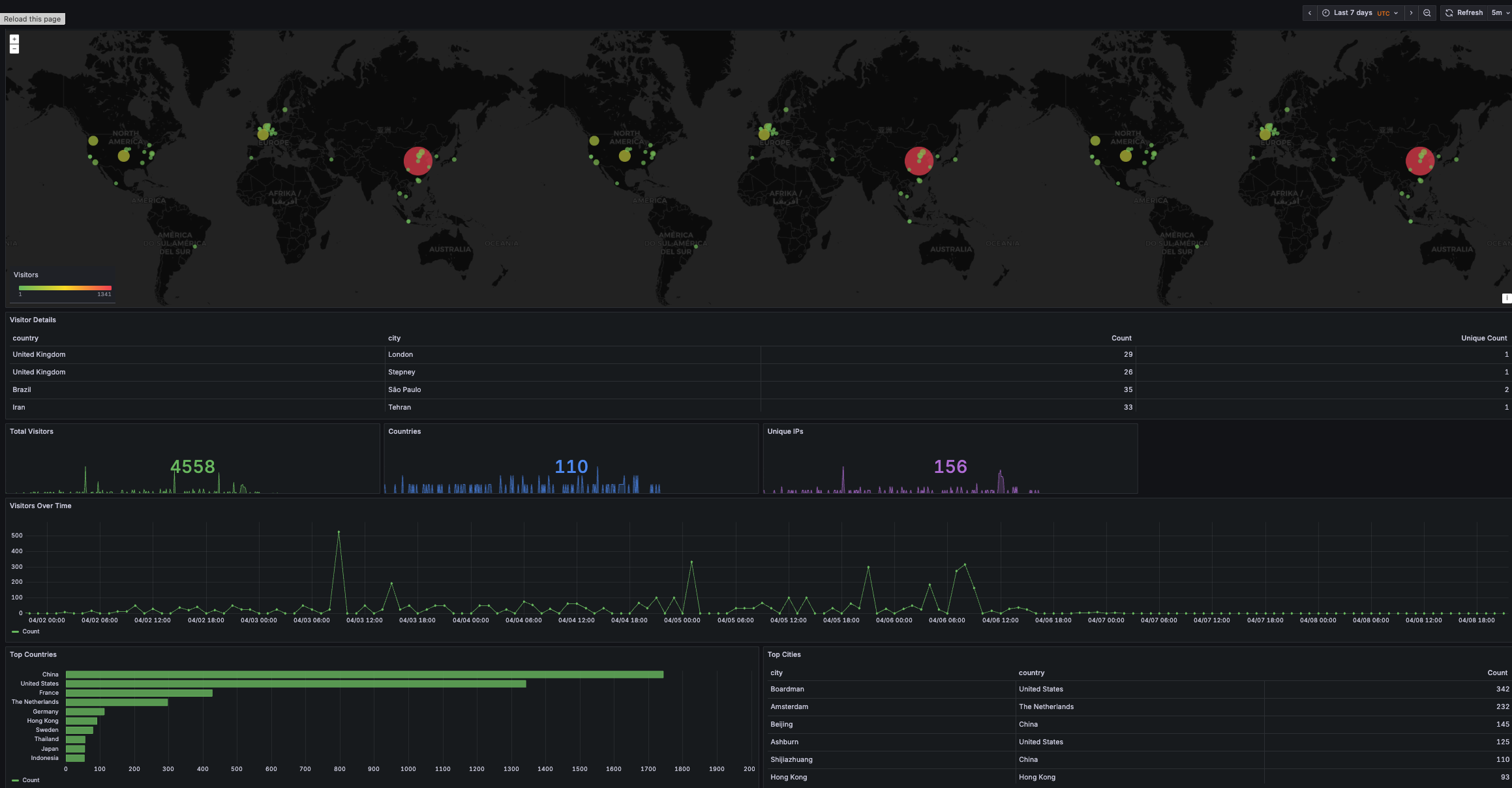
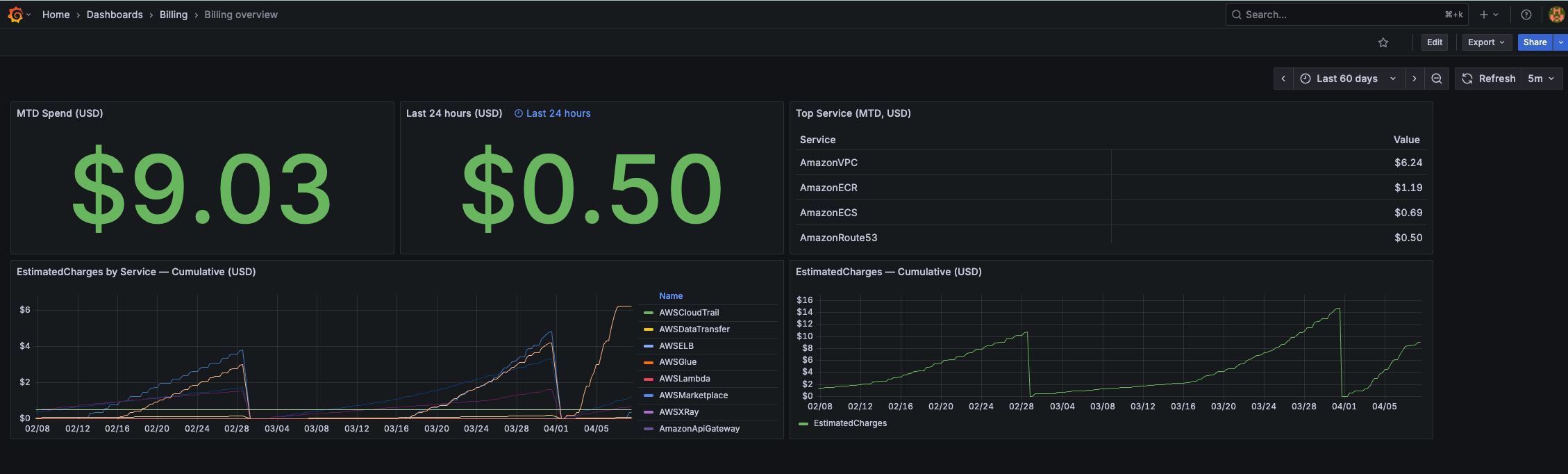
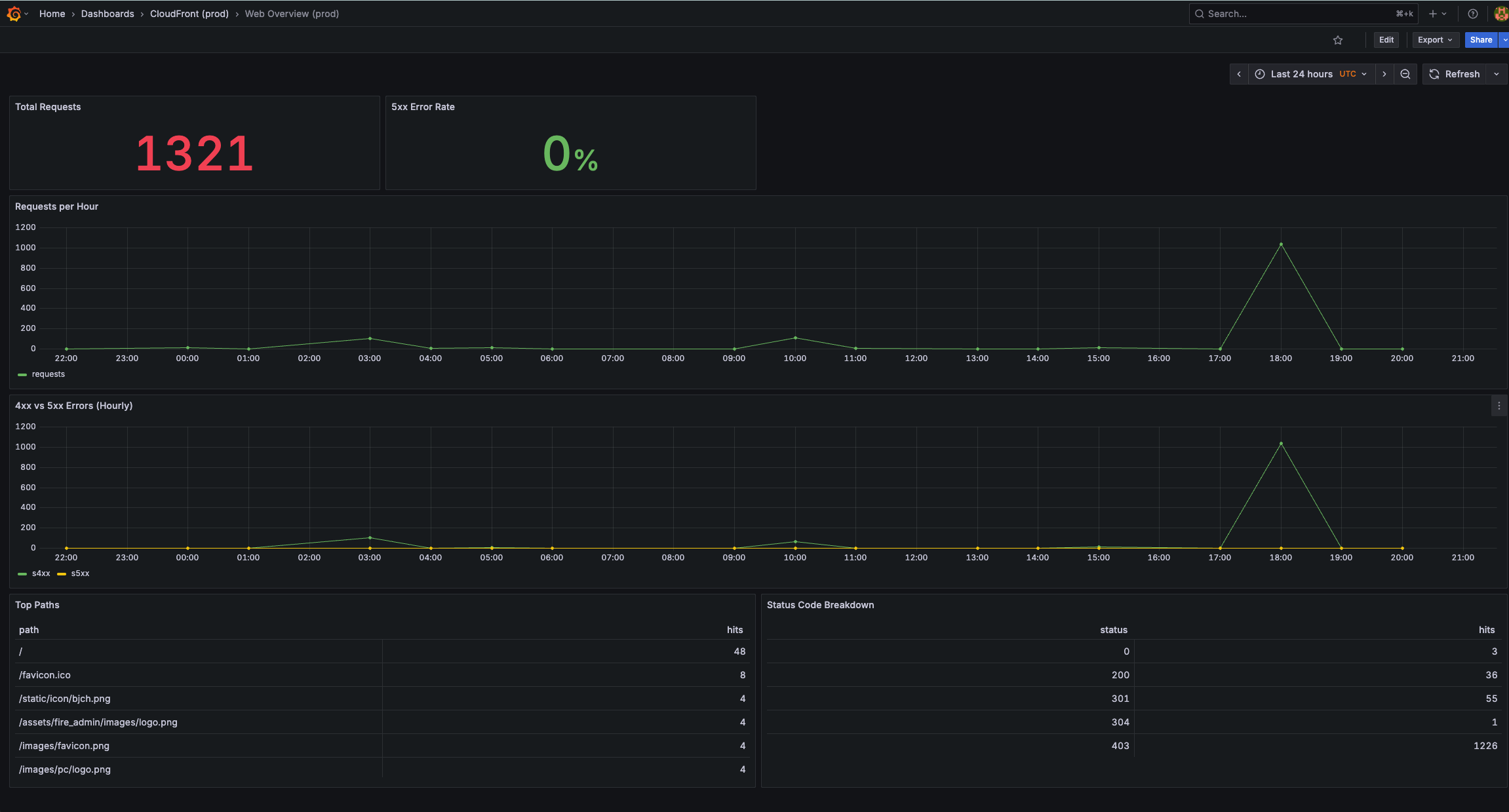
The same Grafana dashboards — billing, traffic, geo-analytics, engagement and growth metrics — and the same CloudWatch alarms serve both. Real production 500s have been root-caused from CloudWatch and fixed. An N+1 latency bug (112 API calls down to 30) was diagnosed, fixed, and verified against real dashboards.
The sec layer
Tiered access, human-gated production
Agents reach infrastructure through a tier-gated MCP server: read-only production probes (cost, traffic, alarms, growth metrics) by default, writes gated behind approval tiers mapped to distinct IAM roles. Production deploys keep a human in the loop.
The quality gate
The AI's outputs are tested like code
Chócala's core feature is an LLM that turns a coach's whiteboard into structured workouts. Its prompt has a versioned corpus of real-shaped cases and an eval job in CI; a prompt or model change is a merge request that re-runs the evals and shows the token-cost diff. The model id itself lives in a reviewed YAML file.
The stop button
Agents that know when to park
Live infrastructure changes, releases, CI and credential edits, and anything that adds standing AWS cost are outside an agent's allowlist. When a task needs one, the agent parks the issue with the reason (and, for cost, the monthly delta) instead of improvising — and the review loop answers reviewer comments in rounds until the MR converges or a human takes over.
By the numbers
30 days of agents on a real app
Chócala, 20 Aug – 18 Sep 2026. Pulled from the same GitLab data the Engineering Delivery dashboard reads.
The day-one system
Fresh AWS account to working agent platform, scripted
Six ordered playbooks take an empty AWS account to a working platform — state backend and budgets, identity tiers, OIDC for CI, foundations, the first environment, the agent layer — with Terraform and Terragrunt doing the work and a human typing the two commands that need root. That is how the account Chócala runs in was built.
The bootstrap that built Chócala's account
Six playbooks, in order. Every resource is Terraform + Terragrunt; the console is never clicked.
▋Straight talk: we have run these playbooks end to end once, on our own account in June 2026, and kept the hiccup list. The infrastructure genuinely stands up in a day; client engagements pace on account access and review cycles, so typical kickoff-to-handoff is 1–2 weeks.
The DevSecOps loop
Agents don't just write code. They operate the app.
Coding assistants stop at the merge request. Infralista's agents carry the loop the rest of the way: they watch production, reproduce what breaks, fix it with tests, and hand a reviewable MR to a human — on your runners, on your meter, under your guardrails.
A nightly sweep, end to end
Scheduled CodeBuild runner in your account. Human review before anything merges.
▋Shared observability
One set of dashboards for agents and humans
Monitoring without the setup
Every environment gets Grafana dashboards automatically: billing, traffic, and geo-analytics — readable by your team and queryable by your agents.Billing, traffic, geo-analytics, growth
Grafana dashboards provisioned automatically for every environment. The same panels your team reads are the ones agents query through the MCP server.
Alarms that feed the loop
CloudWatch alarms and error logs are agent inputs, not just pager noise. Real production 500s on Chócala were root-caused from CloudWatch and fixed through this loop.
Fixes verified against reality
When an agent or a human ships a fix, the dashboards say whether it worked. The 112-call N+1 on Chócala was verified down to 30 calls on real traffic.
Governance
The part that lets you say yes to agents
Speed only matters if you can trust it. Agents reach your infrastructure through a single-tenant MCP server deployed inside your own AWS account — image-pinned, IAM-scoped, CloudTrail-audited. What it exposes is a profile from one policy file in your repo: read-only for production, release for dev, with the sweep's queue rules and hard rules in the same file. The tools that can change anything refuse to run without an explicit confirm, an account allowlist, and a human at the keyboard. And agents never merge: the merge-request pipeline is the gate.
Read-only by default
Cost, traffic, alarms, growth metrics. Agents can see production without being able to touch it. This is where every agent starts.
Writes behind a profile you review
One policy file in your account repo names the profiles (read-only, operator, release) and which environment gets which. The server drops every tool the profile does not grant at startup; deploy and release still need an explicit confirm and an allowlisted account. Granting a capability is a merge request, not a prompt.
Human in the loop
Production deploys require human approval, always. Agents propose; the merge and the deploy gate belong to your team.
Inference on your meter
Agents run on your Claude subscription or through your own Amazon Bedrock — your choice, your bill, no markup, nothing proxied through us. With Bedrock, prompts and tool results never leave your AWS account. The model id is a reviewed YAML file, so a model bump is a merge request.
Hard spend caps
A spend-breaker at the platform layer, not the honor system: hourly burst and daily soft/hard thresholds on real billing data, and when one trips a Lambda pauses the agent schedules and emails you. Armed on Chócala's own fleet.
Audited like everything else
Every tool call, role assumption, and guardrail event lands in CloudTrail and the same Grafana/CloudWatch dashboards your team already reads.
Security & compliance
Built to survive a security review
The same discipline that keeps agents in their lane hardens the whole platform. Controls are code — reviewed, versioned, and auditable — so a vendor-risk questionnaire is mostly a matter of pointing at the repo.
SOC 2-aligned controls
Scoped IAM per environment, change management through pull requests, and CloudTrail audit logging in every account — mapped to the Trust Services Criteria your auditors already use.
No standing credentials
OIDC federation means zero long-lived AWS keys for CI or agents to leak. Every role is assumed, scoped to one environment, and expires — nothing sits in a config file waiting to be stolen.
Ransomware-resistant by design
Multi-layer Terraform deletion guards protect production. A compromised role can't casually destroy or re-encrypt what protected_env defends — destructive changes require an explicit, reviewed override.
Audit & tagging built in
Every resource is tagged and inventoried. An audit module flags untagged, drifted, or orphaned resources before they turn into an audit finding — or a surprise bill.
Single-tenant, in your account
MCP server, agent runners, and every byte of environment data stay inside your AWS boundary. There is no vendor-side multi-tenant SaaS to add to your data map.
Tracks the AI frameworks
The agent layer is structured around ISO/IEC 42001 principles for AI management and tracks the EU AI Act, so the governance story is ready when your customers' regulators ask for it.
Straight talk: Infralista is SOC 2-aligned, not yet SOC 2 certified, and we track ISO/IEC 42001 and the EU AI Act rather than claim certification. We'll tell you exactly what's shipped versus on the roadmap — that's the kind of vendor you want touching production.
Watch a full deploy
What gets deployed
Networking & DNS
VPC with public/private subnets, Route 53 hosted zones, ACM certificates, and optional NAT gateway.
Compute & Storage
CloudFront distributions, S3 static hosting, ECS Fargate services, Lambda functions, Aurora Serverless, and ECR container registries with lifecycle policies.
CI/CD & Security
GitLab OIDC federation (zero static keys), multi-arch Docker builds, automatic semantic versioning, and IAM least-privilege roles.
Observability & Cost
Grafana dashboards (billing, traffic, geo-analytics, growth), CloudWatch alarms, budget alerts, CloudTrail audit logging, and sleep mode scheduling.
AI Agent Layer
A single-tenant MCP server (read-only production probes; deploy/release only with explicit confirm) plus scheduled agent runners on CodeBuild, on your Claude subscription or your Bedrock — spend-breaker armed, human-gated for production.

How an engagement runs
Kickoff & account access
A call to understand your app, your team, and what agents should be allowed to do. You grant access to a fresh or existing AWS account.
The bootstrap
Six ordered playbooks stand up foundations, environments, CI/CD, observability, and the agent layer. The infrastructure itself is a day of work.
Review & handoff
Your team reviews the IAM roles, tool tiers, and pipelines; we pair on the first agent runs and tune the guardrails. Typical kickoff-to-handoff is 1–2 weeks.
Operate
Agents sweep nightly and open MRs. Your team reviews and deploys. We stay engaged for module updates, dashboards, and incident support on subscription.
FAQs
Frequently Asked Questions
What do the agents actually do?
They run on scheduled nightly sweeps in AWS CodeBuild: pick up issues from your board, reproduce bugs (pulling real errors from CloudWatch), write fixes with tests, and open merge requests for human review. Through the MCP server they can also answer operational questions — cost, traffic, alarms, growth metrics — read-only by default. Nothing merges or deploys to production without a human.
What happens when an agent screws up?
The blast radius is designed to be boring. A bad code change dies in review — agents open MRs, they don't merge them. A bad tool call is bounded by the tier's IAM role: read-only agents can't write, and writes above their tier fail at the platform layer, not the model's discretion. Runaway spend hits the hard spend-breaker and halts. Everything the agent did is in CloudTrail and the dashboards, so the postmortem is a query, not a mystery.
Is 'set up in a day' real?
Yes, with honest fine print. Six ordered playbooks take a fresh AWS account to a working platform — identity tiers, OIDC, foundations, first environment, agent layer — in a working day, and we have run them end to end for real: once, in June 2026, on the account that now runs Chócala. Kickoff-to-handoff is typically 1–2 weeks because the pacing item is account access and your team's review, not the infrastructure.
Where does our data go when an agent works?
Agent runners execute in your CodeBuild and the MCP server is single-tenant in your account, so environment data, logs, and dashboards never leave your AWS boundary. Inference is your choice: your own Amazon Bedrock keeps prompts and tool results inside the account too; your Claude subscription sends them to Anthropic under your own terms. Either way nothing passes through an Infralista service.
How is this different from Cursor, Copilot, or an autonomous dev agent?
Those are AI that writes code — valuable, and compatible with Infralista — but they stop at the editor or the pull request, and they run as someone else's multi-tenant SaaS. Infralista is the system around and beyond that: the AWS infrastructure the app runs on, the pipelines that ship it, the dashboards that watch it, and agents that operate production — all in your account, under your IAM, with governance as code.
How is this different from a PaaS like Vercel, or a DevOps consultancy?
A PaaS is fast but you don't own it — your app lives on their platform, on their pricing, without an ops or agent layer for your AWS account. A consultancy hands you infrastructure you own, but it takes months and ships without any AI system. Infralista is both halves at once: you own everything from day one, and the AI DevSecOps loop is running the day the bootstrap finishes.
How is the MCP server different from giving Claude a Bash tool?
A Bash tool gives the model whatever your shell can do. The MCP server gives it a deliberately narrow set of tools scoped per agent profile — read CloudFront logs but not Route 53, query Cost Explorer but not run terragrunt apply. Each profile is a YAML file in your git repo with its own IAM role and tool allowlist. Adding a capability is a code review, not a prompt.
Do we need a DevOps engineer on our team?
No. The platform is designed so your developers manage environments with a simple CLI and review agent MRs like any other contributor. For anything beyond that, our support tiers have you covered.
What happens if we want to stop using Infralista?
Everything stays in your AWS account and Git repos: the Terraform modules, CI pipelines, Grafana dashboards, MCP server, and agent runners. Cancel and it keeps running. There is no proprietary lock-in.
How much does the AWS infrastructure actually cost?
A dev environment with sleep schedules runs as low as $20/month on AWS. Production and agent-inference costs depend on your traffic and how hard you run the sweeps — which is exactly why the spend-breaker and per-threshold budget alerts are built in. We help you optimize for your budget.
Are you SOC 2 certified?
We're SOC 2-aligned, not yet certified — and we say so plainly. The controls auditors look for are built in: scoped IAM per environment, change management through pull requests, CloudTrail audit logging, and least-privilege roles. Because the platform runs in your account under your IAM, it slots into your existing compliance program rather than adding a third-party SaaS to your scope. We track ISO/IEC 42001 and the EU AI Act for the agent layer.
What stops a compromised role from wiping or encrypting our infrastructure?
Multi-layer Terraform deletion guards. Production resources are marked protected, so a destroy or replace requires an explicit, reviewed override (protected_env) rather than a single command. Combined with OIDC (no standing credentials to steal), CloudTrail audit logging, and IAM least-privilege, the blast radius of a leaked credential is deliberately small. Cross-account state backups are on the roadmap.
Do you support GitHub, or only GitLab?
Today the platform runs on GitLab CI with OIDC federation. GitHub Actions support is on our roadmap. The pattern that matters — OIDC-federated roles, zero static keys, pipeline-as-code — ports cleanly to GitHub, so for a team already standardized on GitHub it's a deliberate swap, not a rebuild. If GitHub is a requirement for your team, tell us and we'll prioritize it.
Want agents shipping on infrastructureyou actually own?
Book a call and we'll walk you through the real thing — the Chócala account, the dashboards, the nightly sweeps, the guardrails — and map what the same system looks like in your AWS account.